

In-Store vs Online Shopping in Malaysia: How Consumer Behaviour Has Evolved
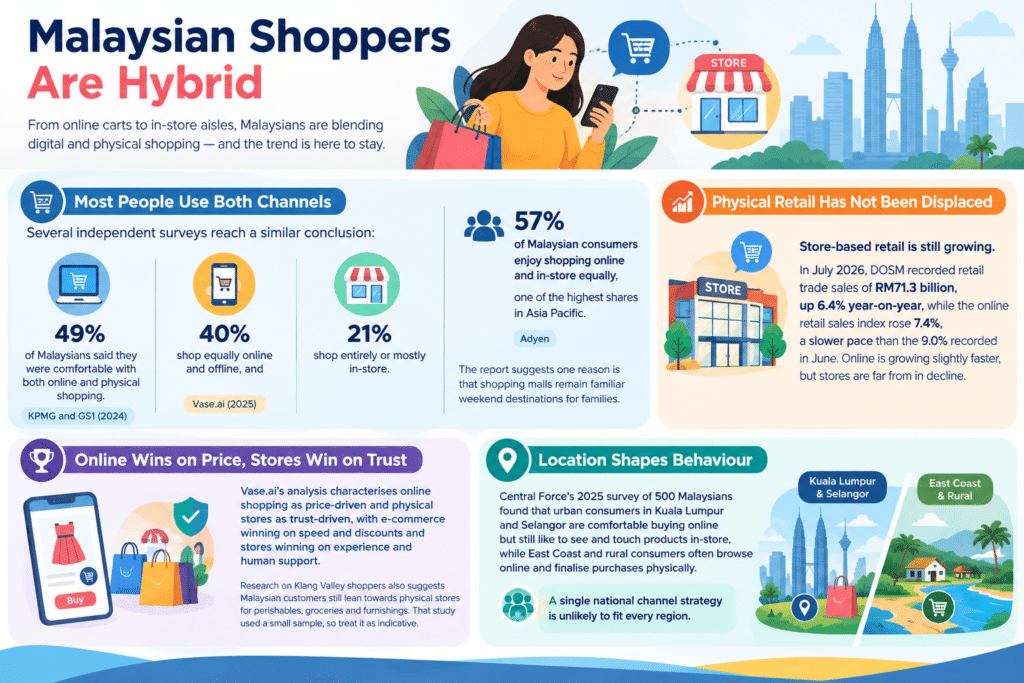
Malaysian retail is often described as a contest between shopping malls and online marketplaces. The data points to something more useful for business owners: most Malaysian shoppers use both.
For marketers and SME owners, the question is where to be present and how to connect the channels. This article traces how shopping in Malaysia has evolved and what it means for your strategy.
From Early Adopters to Everyday Online Shoppers
Before 2020: E-Commerce Was Still Finding Its Feet
Before the pandemic, online shopping was growing but far from mainstream. MDEC’s 2019 assessment described Malaysia as still in the early stages of e-commerce maturity, trailing regional peers such as Singapore.
The Movement Control Order Changed Habits
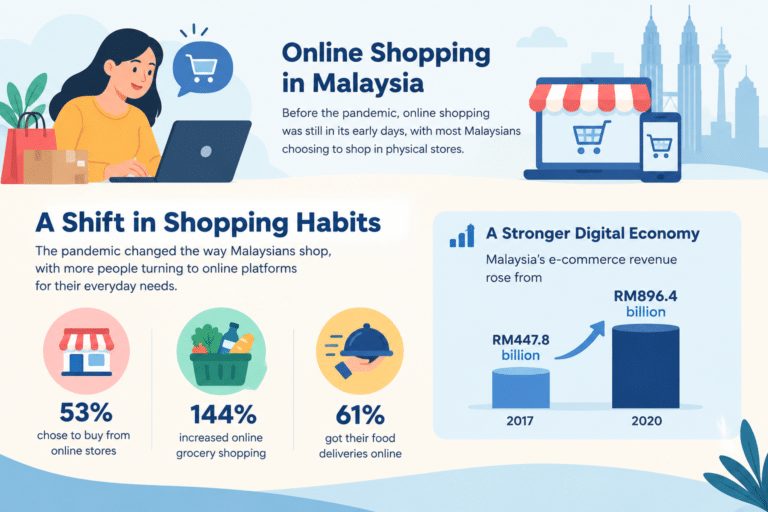
The Movement Control Order (MCO) closed most physical stores and pushed many Malaysians online. Online non-food shopping rose by 53%, online grocery shopping by 144% and online food delivery by 61% during the period. Academic research citing DOSM data reports that Malaysia’s e-commerce revenue rose from RM447.8 billion in 2017 to RM896.4 billion in 2020.
Where E-Commerce Stands Today
Growth Has Moved from Surge to Steady
The rapid growth has cooled. DOSM reported that Malaysia’s e-commerce revenue for January to September 2025 reached RM937.5 billion, up 1.9% year-on-year. Business-to-business transactions remain the largest contributor to this revenue.
A Closer Look by Category, Business Model, Device and Payment Method
Mordor Intelligence (2025) breaks the market down along four dimensions, showing where volume sits today and where growth is headed:
Fashion and apparel led with a 26.67% revenue share in 2025, while food and beverage is forecast to be the fastest-growing category, expanding at a 16.46% CAGR through 2031.
B2C held 80.89% of the market in 2025, but B2B, smaller today, is projected to grow fastest, at a 15.63% CAGR to 2031.
Smartphones already captured 72.67% of e-commerce transactions in 2025 and are projected to keep growing, at a 15.87% CAGR.
Digital wallets accounted for 34.92% of transaction value in 2025, while buy-now-pay-later (BNPL) is set to grow fastest, at a 17.18% CAGR to 2031.
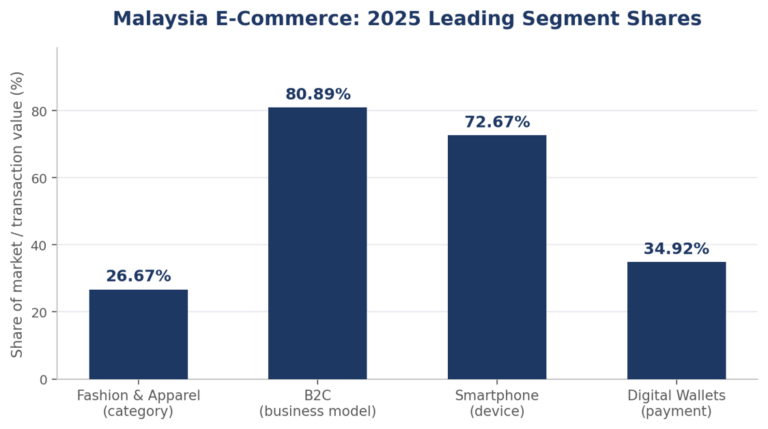
Figure 1: Leading segment shares in Malaysia’s e-commerce market, 2025 (Source: Mordor Intelligence)
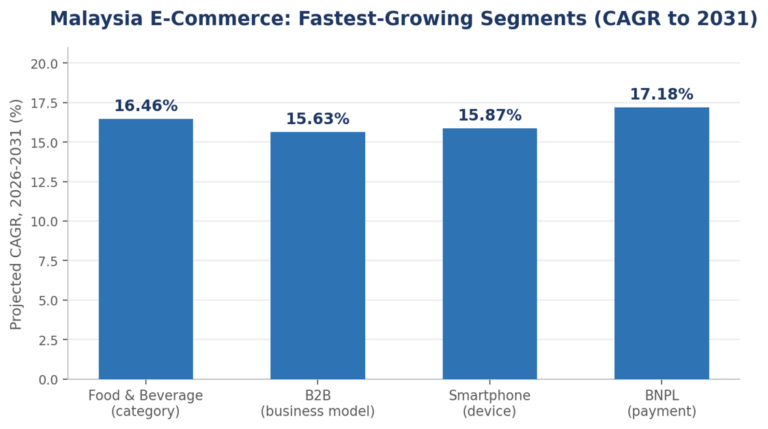
Figure 2: Fastest-growing segments by projected CAGR, 2026–2031 (Source: Mordor Intelligence)
The pattern across all four dimensions is consistent: today’s largest segment (fashion, B2C, smartphone, digital wallets) isn’t necessarily tomorrow’s fastest-growing one. Smartphones stand out as both the current leader and a continued growth driver, a reminder that mobile-first design isn’t optional.
For SMEs, this suggests two separate questions worth asking: “where is the volume today?” and “where is the growth coming from?”, since the answer isn’t always the same category.
Competition Is Intensifying
Shopee is the largest online retailer in Malaysia, followed by TikTok Shop and Lazada. Mordor Intelligence reports that urban penetration already exceeds 85% in the Klang Valley, Penang and Johor Bahru, and that the cost of acquiring first-time buyers rose 23% year-on-year in 2025. Reaching new online customers is getting more expensive, which makes retaining existing ones more valuable.
Malaysian Shoppers Are Hybrid
The Rise of Social and Live Commerce
Social platforms have become a third channel alongside marketplaces and stores. Mordor Intelligence notes that interoperable DuitNow QR has reduced payment friction at 2.6 million merchant points, helping live-stream shopping to grow.
Support for smaller businesses is growing too. TikTok Shop and TEKUN Nasional have launched LIVE Hubs to help MSMEs, with the Kelantan hub the fourth after Sabah, Kuala Lumpur and Johor. TikTok Shop Malaysia has also said it will run more than 1,000 All-Star LIVE sessions in 2026 to support brands in its Mall programme. These are platform announcements, so treat them as evidence of activity rather than proof of seller results.
What This Means for Malaysian SMEs and Marketers
|
No |
Item |
Remarks |
|
1 |
Plan for a blended journey |
Customers may discover you on TikTok, compare prices on Shopee and buy in your shop, or the reverse. Consistent pricing, stock information and service across channels matter more than picking a winner. |
|
2 |
Match the channel to the category |
Products that benefit from touch, trial or immediate use may need a physical presence. Standardised, price-comparable products suit marketplaces. |
|
3 |
Localise by region |
Urban and East Coast or rural customers may follow different paths to purchase. |
|
4 |
Use social and live selling to test demand |
Low-cost live selling can validate a product before you commit to inventory or premises. |
|
5 |
Watch acquisition costs |
As urban markets saturate, retention through loyalty programmes, service and repeat-purchase offers is likely to protect margins better than constantly buying new customers |
|
6 |
Measure your own data |
National surveys show the direction of travel, but your customers’ behaviour is what counts. Primary research with your own audience will tell you more than any benchmark. |
Conclusion
Malaysian shopping has moved from “online versus in-store” to “online and in-store.” E-commerce is now a mature part of the market, and physical retail is still growing beside it.
The businesses best placed to benefit are those that understand how their customers move between channels and are present at each step.
Metrix Research is a Malaysia-based market research consultancy helping brands and businesses make better decisions through robust consumer insights and evidence-based research. Discover how we can help you measure and maximise your research impact by exploring our website or contact us today.
For more articles, please explore insights
Sources
- Department of Statistics Malaysia (DOSM), e-commerce revenue 9M2025, as reported by The Star (26 Nov 2025) and FMT (26 Nov 2025); DOSM Malaysia Digital Economy 2025
- DOSM wholesale and retail trade, July 2026, as reported by The Star (11 Sep 2026)
- KPMG Malaysia and GS1, “Seamless commerce a necessity for Malaysia’s retailers” (18 June 2024)
- Adyen, “Where we shop and how we pay” (Malaysia retail report)
- Vase.ai, “10 Consumer Shopping Habits in Malaysia in 2025”
- Central Force, Malaysia Consumer Trend Report 2025 (via Nabalu News, 5 Aug 2025)
- Mordor Intelligence, Malaysia E-commerce Market report (2026-2031)
- eCommerceDB, E-Commerce Industry in Malaysia
- LSE SEAC, “The impact of COVID-19 on SME digitalisation in Malaysia” (Oct 2020)
- Bernama, TikTok Shop LIVE Hub coverage (Feb 2026, Dec 2025)
- Academic sources: hrmars.com omnichannel study (Klang Valley); ResearchGate paper on youth online shopping post-COVID