

Malaysian Consumer Spending Habits During Festive Seasons: A Deep Dive
The Underlying Psychology: Festive Spending is "Protected" Expenditure
Before diving into each festival, it’s important to understand the foundational mindset. Dr Carmelo Ferlito, chief executive of the Centre for Market Education, has observed that households are not simply buying food, clothes, or decorations during festivals — they are reaffirming belonging. Even under cost-of-living pressures, Malaysians tend to reallocate priorities rather than abandon festive spending, as traditions and familial expectations shape decisions to host relatives, prepare elaborate meals, and distribute gifts, each imbued with emotional significance.
This behavioral pattern has been confirmed by the Malaysia Consumer Trend Report 2025, which found that despite financial strain, Malaysians continue to spend during festive seasons, with the emotional and social value attached to celebrations like Hari Raya, Chinese New Year, and Deepavali driving continued expenditure during holiday seasons.
The practical consequence of this is what economists describe as “reallocation behaviour”: across the country, families are tightening discretionary spending, postponing non-essential purchases and budgeting with greater care, while continuing to ringfence funds for clothing, food preparation, balik kampung travel, and duit raya.
Chinese New Year: Behaviour Snapshot
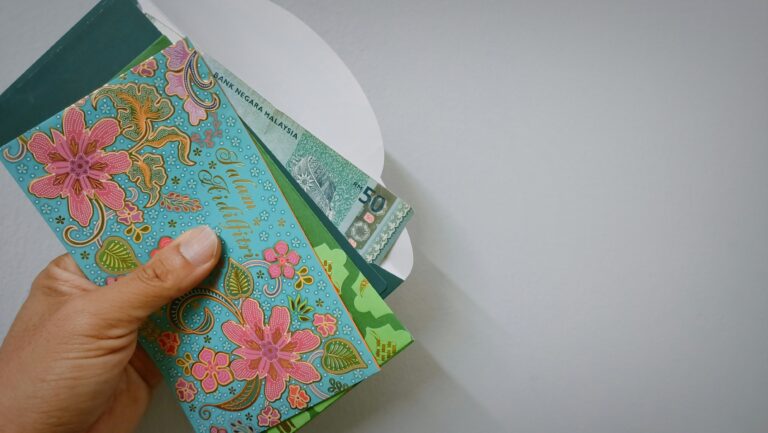
Chinese New Year spending in Malaysia is driven by long held traditions, with families purchasing new clothes, reunion dinner ingredients, snacks, cookies, decorations, and greeting cards well in advance of the celebration. Ang Pau gifting remains central, and its practice has extended beyond the Chinese community, with Malays giving green packets during Hari Raya and Indians giving purple packets during Deepavali. At the same time, gifting habits are evolving as more families shift toward cashless options such as e-wallet transfers and bank deposits, a trend supported by EPF’s advice to channel Ang Pau funds into savings rather than post festival spending.

Celebrations also expand economically through Malaysia’s open house culture, which brings together people of all ethnic backgrounds and boosts restaurant traffic and gift purchases.
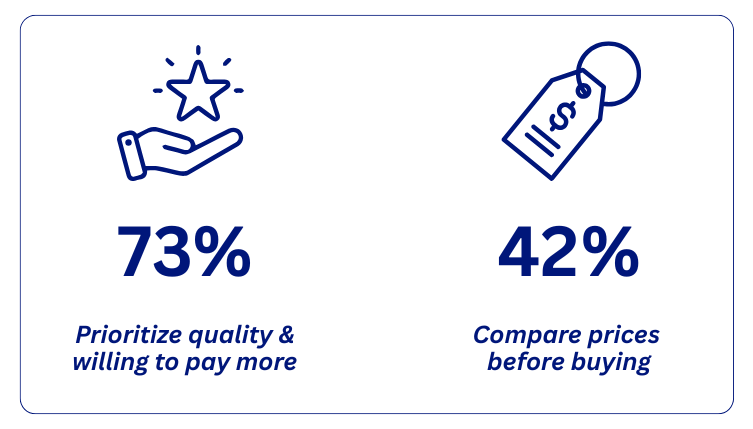
Consumer behavior shows a balance between quality and price sensitivity: while 73% of Malaysian Chinese consumers prioritize quality and are willing to pay more. 42% of Malaysians overall consistently compare prices before buying, whether online or in-store
Hari Raya: The Most Extensively Studied Festival
Hari Raya remains Malaysia’s most studied festive season, with research highlighting earlier, smarter, and increasingly digital shopping behaviour. Consumers now plan well ahead, with 98% beginning purchases as early as Q4 2024, and many starting clothing shopping between January and March. Budget consciousness is strong, with 70% keeping total spending under RM500 and allocating modest amounts for clothing, hampers, and gifts. Despite tighter budgets, Malaysians prioritise quality over quantity, buying fewer but better items, especially in fashion and food.
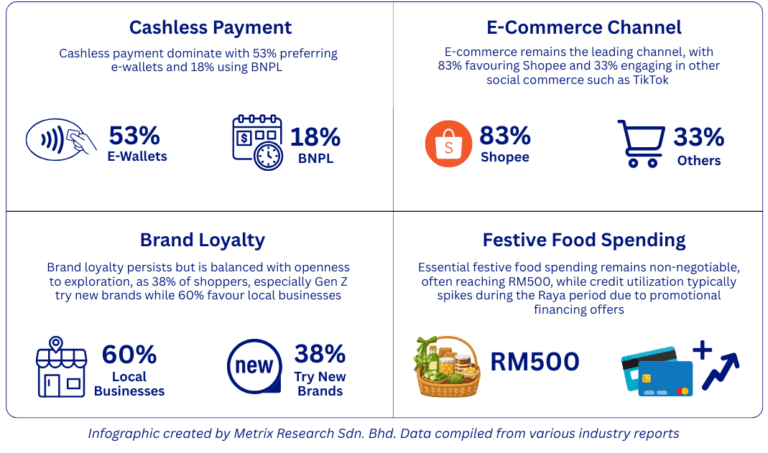
Digital adoption continues to reshape Raya spending:
Christmas: The Season that Belongs to Everyone

Christmas in Malaysia has evolved into a shared cultural and commercial celebration that extends well beyond the Christian community. The nation’s open house culture encourages participation from Malaysians of all backgrounds, who take part in meals, gift exchanges, and festive mall activities. Christmas is also heavily shaped by the broader year end sales cycle, with shoppers planning purchases around major promotions such as 11.11 and 12.12, treating Christmas as the peak of a weekslong deal seeking period rather than a single day event.
- Spending during the Christmas period aligns with other Q4 festive pattern, with strong demand for fashion, beauty, food and beverages, electronics, and home décor, categories purchased by a large share of festive shoppers.
- Regional variation is significant: urban centers like Kuala Lumpur, Penang, Ipoh, as well as Sabah and Sarawak, record the highest Christmas related spending, with digital shopping particularly strong in the Central Region where 49% of consumers shop fully online. Meanwhile, Northern Region shoppers still show a preference for in-store purchases at 47.66%
Cross-Festival Behavioral Patterns: What Applies to All Three Seasons
- Price comparison is universal. Whether purchasing from physical retail stores, online, or through e-commerce market places, 42% of Malaysian consumers always compare pricing before making a purchase. During festive seasons, this behavior intensifies as households try to stretch limited budgets further.
- Social media drives discovery. Young Malaysians prefer buying products through social media platforms, driven by convenience, discovery of new items, and influencer recommendations. The social commerce sector is projected to reach US$1.73 billion in 2024. Festive campaigns on TikTok, Instagram, and Facebook are now essential touchpoints for reaching consumers before they commit to purchases.
- Trust drives platform selection. When asked which feature gives the most confidence when shopping online for Raya, 75% of respondents chose platform security features — citing flexible payment options, platform guarantees, and verified mall status as key factors. This trust imperative applies across all festive seasons.
- Hybrid shopping is the new normal. One of the most striking findings from 2025 research is the rise of hybrid retail behaviour, where consumers browse in one channel but purchase in another. In the East Coast (Kelantan, Terengganu, Pahang), 51.85% browse in-store but buy online; in the Northern Region, 47.66% still prefer buying in-store; while in the Central Region, 49.08% of consumers shop fully online.
- Income stagnation is reshaping priorities. The Malaysia Consumer Trend Report 2025 found that over half of Malaysian consumers experienced no income growth in the past year. Amid escalating living expenses, many households are forced to make hard financial decisions, including pausing major purchases, delaying travel, or turning to credit and government support schemes. Yet festive spending remains ring-fenced, making the festivals key moments of consumer resilience.
Metrix Research is a Malaysia-based market research consultancy helping brands and businesses make better decisions through robust consumer insights and evidence-based research. Discover how we can help you measure and maximise your research impact by exploring our website or contact us today.
For more articles, please explore insights
Sources: Milieu Insight (Raya 2025 Survey, March 2025); Shopee Malaysia Raya 2025 Buyer Trends Study (April 2025); Malay Mail / The Vibes (February 2026); Vodus Consumer Sentiment Study 2024; Malaysia Consumer Trend Report 2025 by Central Force International; PublicHolidays.com.my; KWSP (January 2026); Free Malaysia Today (April 2025).