

The Future of Experience (CX) In Malaysia: Trends, Statistics and Strategies for 2026 and Beyond
Introduction: Why Customer Experience Matters in Malaysia's Digital Economy

Customer experience (CX) is rapidly becoming the defining competitive advantage for businesses in Malaysia. As digital adoption accelerates and customer expectations rise, organisations across industries—from banking to retail—are being forced to rethink how they interact with customers.
Malaysia is uniquely positioned in Southeast Asia as a highly connected, mobile-first society, where consumers expect seamless, personalised, and fast experiences across all touchpoints. With strong government initiatives like MyDIGITAL and increasing investments in artificial intelligence (AI), the future of CX in Malaysia is both promising and highly competitive.
This article explores the key trends shaping the future of customer experience in Malaysia, supported by latest statistics, industry insights, and case examples.
Digital Transformation In Malaysia Driving Customer Experience Innovation
Malaysia’s High Internet and Mobile Penetration
Malaysia’s CX evolution is driven by a highly digital population. As of 2025:
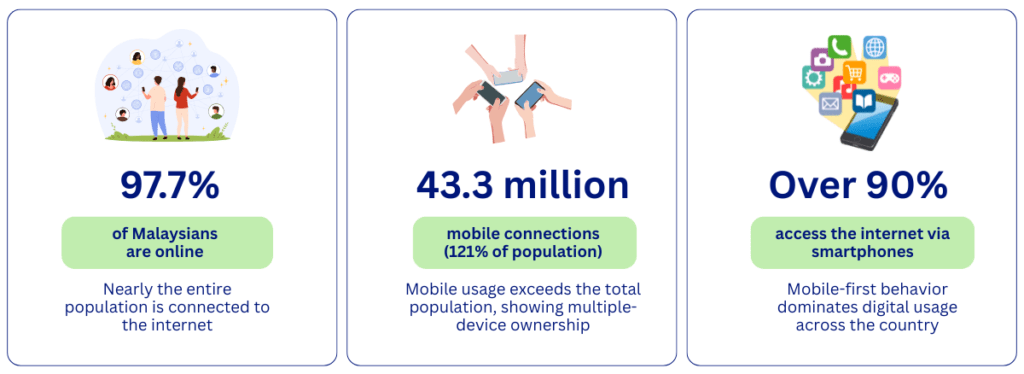
What this means for customers…
This digital maturity has transformed expectations. Customers now demand:
- Fast and seamless online experiences
- Mobile-first interfaces
- Real-time responses across channels
At the same time, Malaysia’s digital economy continues to expand, with ICT contributing 23.4% to GDP (RM451.3 billion in 2024). This highlights the central role of digital technology in shaping customer interactions.
Implication: Businesses that fail to deliver smooth digital journeys risk losing relevance in an increasingly competitive marketplace.
Artificial Intelligence (AI) and Automation In Customer Experience Malaysia
AI-Powered Customer Support and Chatbots
AI is reshaping customer experience across Malaysia, particularly in sectors like banking, telecom, and e-commerce.
Key developments:

Case Example: Banking Chatbots
Malaysian banks such as CIMB (EVA chatbot) and Hong Leong Bank have implemented virtual assistants to handle customer enquiries.
These systems:
- Provide instant responses
- Reduce operational costs
- Improve service availability (24/7 support)
Balancing Automation with Human Touch
In some implementations, chatbots have reduced response times from hours to seconds and automated large volumes of enquiries.
However, research shows that customer satisfaction depends on chatbot reliability, responsiveness, and empathy, indicating that technology must be balanced with human experience.
Implication: The future of CX lies in combining AI efficiency with human empathy.
Omnichannel and 'Phygital' Customer Experience Trends In Malaysia
Seamless Integration of Online and Offline Channels
Modern Malaysian consumers move seamlessly between digital and physical channels. This has led to the rise of omnichannel (and phygital) experiences, where online and offline interactions are fully integrated.
Examples include:

Malaysia’s e-commerce sector has experienced significant growth, with e-commerce transactions surpassing RM1.18 trillion in 2023 and projected continued expansion.
At the same time:
- Physical retail remains important for product experience
- Digital channels dominate discovery and purchasing decisions
Implication: The future is not online vs offline—it is a seamless blend of both.
Growth Of Social Commerce and Messaging-Based Customer Engagement
Social Media Dominates Customer Journeys
Malaysia is one of Southeast Asia’s most active social media markets:
- 70%+ of the population uses social media
- Around 68% of users have made purchases via social platforms
- WhatsApp alone has over 26 million users, making it a key business channel
Conversational Commerce
Platforms such as:

are now central to the customer journey—from discovery to purchase and after-sales support.
This has given rise to conversational commerce, where customers interact with brands through messaging apps rather than traditional websites.
Implication: Businesses must engage customers where they already spend their time—on social and messaging platforms.
Personalisation and Data Driven Customer Experience Strategies
Hyper-Personalisation Becoming the Standard
Malaysian consumers increasingly expect personalised interactions. Leading companies are using:
- Customer Data Platforms (CDPs)
- AI-driven recommendations
- Behavioural analytics
to deliver tailored experiences.
The State of CX Malaysia report highlights that top-performing companies are heavily investing in AI and personalisation technologies.
Implication: Personalisation must be handled carefully.
Data privacy and Customer Trust In Malaysia
Understanding PDPA Compliance
With increased data usage comes growing concern about privacy.
Malaysia’s Personal Data Protection Act (PDPA) 2010, along with recent amendments, regulates how organisations handle customer data in commercial transactions.
Key requirements include:

Stronger enforcement, including penalties of up to RM1 million or imprisonment, reflects increasing regulatory focus.
Implication: Trust is becoming a core component of CX. Businesses must prioritise transparency and security.
Importance of Localisation and Cultural Relevance In Malaysia
Serving a Multicultural Audience
Malaysia’s diverse population presents both opportunities and challenges for CX.
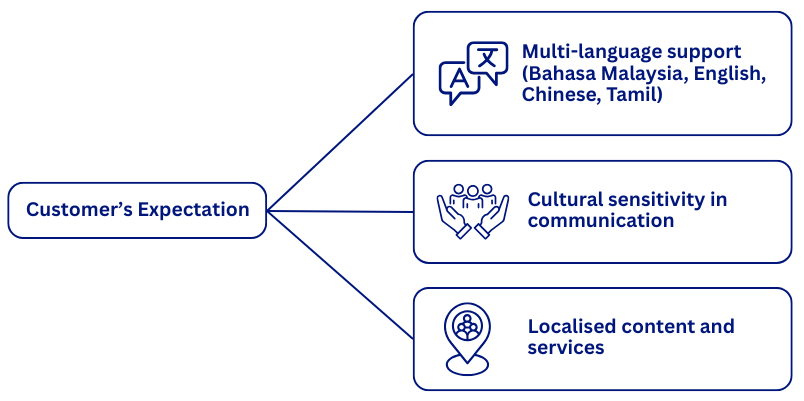
Beyond Translation: True Localisation
Experts highlight that localisation goes beyond translation, it involves understanding cultural nuances, tone, and behaviour patterns.
Implication: Brands that localise their CX effectively will have a strong competitive advantage.
Employess Experience (EX) As A Driver Of Customer Experience
Why Employee Experience Matters
Another critical trend is the link between employee experience (EX) and CX.
Research shows that companies investing in:
- Staff training
- Digital tools for employees
- Service design processes
can improve customer retention and reduce service costs significantly.
In Malaysia, organisations are increasingly integrating:
- CX design frameworks
- Feedback loops
- Real-time analytics
to empower frontline employees.
Implication: Great customer experiences start with empowered employees.
Future Trends Shaping Customer Experience In Malaysia (2026-2030)
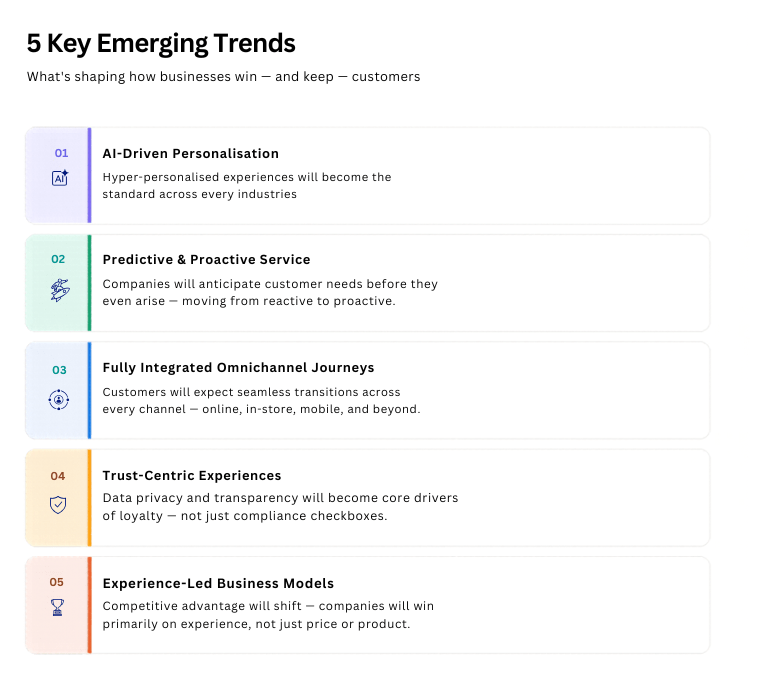
Malaysia’s CX satisfaction score of 78% in 2026 shows improvement, but still lags behind regional leaders, indicating further growth potential. [my.udeskglobal.com]
Conclusion: The Future Of CX In Malaysia Is Experience-Led
The future of customer experience in Malaysia lies at the intersection of technology, personalisation, and human connection.
Malaysia’s highly digital population, rapid adoption of AI, and growing expectations for seamless service are pushing organisations to innovate faster than ever before. At the same time, factors such as customer trust, cultural relevance, and employee engagement will play an equally important role.
Businesses that succeed will be those that:
- Embrace digital transformation
- Invest in AI and personalisation
- Build trust through strong data practices
- Deliver seamless omnichannel journeys
- Stay culturally relevant in a diverse market
Ultimately, customer experience is no longer just a function—it is the foundation of long-term business success in Malaysia’s evolving digital economy.
Metrix Research is a Malaysia-based market research consultancy helping brands and businesses make better decisions through robust consumer insights and evidence-based research. Discover how we can help you measure and maximise your research impact by exploring our website or contact us today.
For more articles, please explore insights
Sources:
- Datareportal.com, 2025
- Sellercraft.co, 2025
- Dosm.gov.my, 2025
- Themalaysianreserve.com, 2024
- Ccam.com.my, 2025
- Instadesk.com, 2025
- Banking Chatbots: A Study on Technology Acceptance among Millennials in Malaysia, Multimedia University, 2022
- Impact of chatbot service quality on satisfaction and loyalty of bank customers, IIUM 2021
- Hashmeta.com, 2025
- Ainvest.com
- Recordinglaw.com
- Kiteworks.com
- Malaysia.incorp.asia/guides
- My.udeskglobal.com